
 EN
EN
 AZ
AZ
 RU
RU
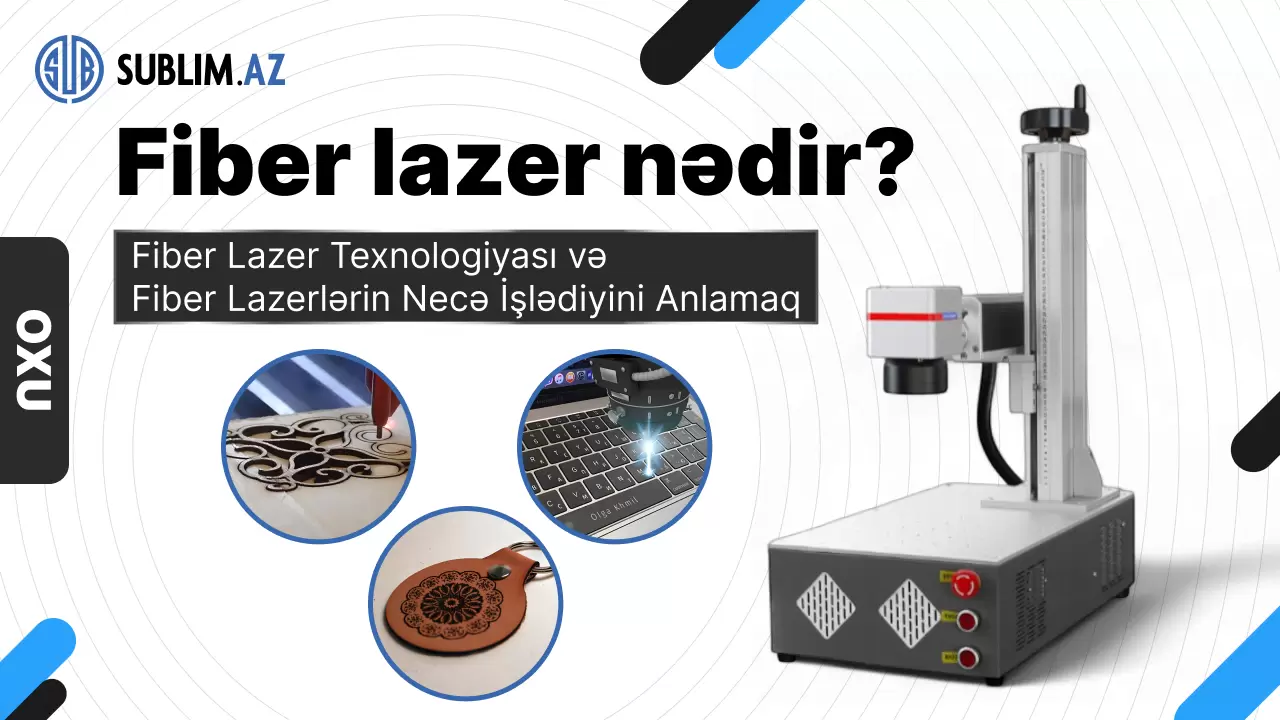
What is a fiber laser?
What is a Fiber Laser? Understanding Fiber Laser Technology and How Fiber Lasers Work
Fiber lasers represent endless advancements in laser technology that revolutionize every industry, including manufacturing. So, what exactly are fiber lasers and how do they work? This article explores the field of fiber laser technology, explains its complex mechanics, and examines why it is preferred in terms of precision, efficiency, and reliability. Whether you are a professional interested in incorporating fiber lasers into your system or simply curious about next-generation technologies, this will give you a clear understanding of how they work, the advantages they offer, and the areas in which they can be applied. Get ready to be amazed as we explore this sophisticated innovation step by step.
Introduction to Fiber Lasers
Fiber laser technology represents a modern advancement in lasers that offer high precision, energy efficiency, and multifunctional capabilities. Unlike conventional lasers, fiber lasers have an optical fiber doped with rare-earth elements such as ytterbium or erbium. This allows the laser to produce a highly focused, high-power beam with minimal energy loss. Fiber lasers are known for their long lifespan and lower maintenance requirements, thanks to their solid-state nature and absence of moving mechanical parts.
Applications of fiber lasers include processing various industrial materials, such as cutting, welding, engraving, high-level scientific research, and even medical applications. Their compact size and adaptability give them an advantage in almost every industry. According to recent data, the use of fiber lasers is increasing as more companies seek efficient and environmentally friendly solutions for precise work. The capabilities of fiber lasers continue to expand over time, placing them at the heart of modern innovation.
Importance of Fiber Lasers in Modern Industry
Fiber lasers play a major role in modern industries due to their versatility, precision, and efficiency. They are used in manufacturing for cutting, welding, and engraving, providing unmatched accuracy for complex designs. Industries such as automotive, aerospace, and electronics rely heavily on fiber lasers to increase production speed and product quality. According to the latest research, interest in fiber lasers continues to grow due to inquiries focused on energy efficiency and performance improvement. This demonstrates a certain level of awareness and demand for high-quality, durable solutions. Over time, fiber lasers remain indispensable both for driving innovation and meeting the broad demands of various industrial sectors.